

Choosing between a raised deck and a ground-level deck is one of the most important decisions you’ll make when planning your outdoor living space. Both options offer unique advantages, but the right choice depends on your home’s layout, your budget, and how you plan to use your new deck. Understanding the key differences will help you make an informed decision that enhances your Evansville home’s value and your family’s enjoyment for years to come.
Whether you’re looking to create an intimate space for morning coffee or an expansive area for entertaining guests, the height and design of your deck will significantly impact its functionality, cost, and visual appeal. Let’s explore the pros and cons of each option to help you determine which deck style best suits your needs.
Key Takeaways
- Raised decks offer better views, improved drainage, and enhanced home integration but come with higher costs and permit requirements
- Ground-level decks provide easier access, lower construction costs, and simpler maintenance while offering more privacy and safety
- Your choice should be based on your home’s existing structure, intended use, budget, and local building codes in Evansville, IN
Understanding Raised Decks
Raised decks are elevated structures typically built 30 inches or more above ground level. These decks connect directly to your home’s upper floors through sliding doors or french doors, creating a seamless transition between indoor and outdoor living spaces.
Advantages of Raised Decks
Enhanced Views and Light
Raised decks provide superior vantage points, allowing you to enjoy better views of your yard, neighborhood, or natural surroundings. The elevation also allows more natural light to reach lower-level windows and spaces beneath the deck.
Better Integration with Your Home
These decks often feel like natural extensions of your indoor living space, especially when they connect to kitchens, dining rooms, or living areas. This integration can significantly improve your home’s flow and functionality.
Improved Drainage and Ventilation
The elevation allows for excellent water drainage and air circulation underneath the deck, reducing moisture-related issues and extending the structure’s lifespan. This is particularly beneficial in Evansville’s humid climate.
Increased Storage Potential
The space beneath raised decks can be utilized for storage, outdoor equipment, or even additional living areas with proper planning and construction.
Disadvantages of Raised Decks
Higher Construction Costs
Raised decks require more materials, complex engineering, and often professional deck installation, making them significantly more expensive than ground-level alternatives.
Safety Concerns
The elevation creates fall risks, especially for children and elderly family members. Required railings and safety features add to both cost and visual bulk.
Maintenance Challenges
Cleaning, staining, and repairs become more difficult and potentially dangerous when working at height. Professional maintenance may be necessary more frequently.
Exploring Ground-Level Decks
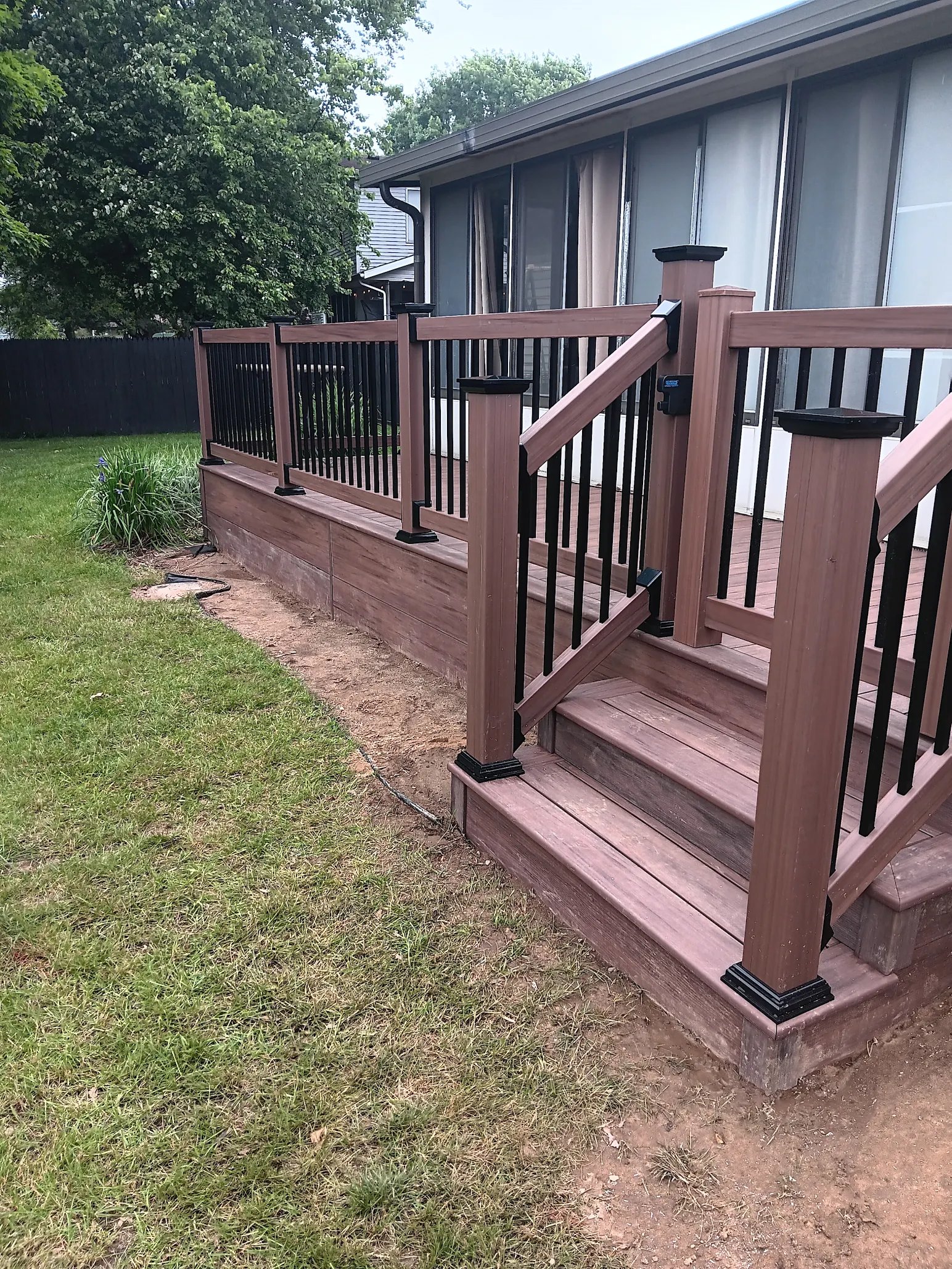
Ground-level decks, also known as floating decks or platform decks, sit close to the ground, typically less than 30 inches high. These structures can be freestanding or attached to your home at ground level.
Advantages of Ground-Level Decks
Cost-Effective Construction
Ground-level decks require fewer materials, less complex engineering, and simpler construction techniques, making them more budget-friendly for homeowners.
Easy Access and Safety
The low height eliminates safety concerns related to falls and makes the deck accessible for all family members, including those with mobility challenges.
Simplified Maintenance
Cleaning, staining, and repairs are much easier when you can work at ground level. This accessibility often means lower long-term maintenance costs.
Flexible Placement
Freestanding ground-level decks can be positioned anywhere in your yard, offering more design flexibility and the ability to take advantage of optimal sun exposure or views.
Disadvantages of Ground-Level Decks
Limited Integration
These decks may feel disconnected from your home’s main living areas, especially if your home’s entry points are elevated.
Drainage Challenges
Ground-level decks may experience water pooling or drainage issues, particularly in areas with poor soil drainage or heavy rainfall.
Reduced Views
The low height limits your perspective and may not take advantage of available views from your property.
Factors to Consider for Your Evansville Home
Home Architecture and Existing Structure
Your home’s design and current entry points will heavily influence which deck type works best. Homes with elevated entry points naturally lend themselves to raised decks, while ranch-style homes with ground-level access may benefit more from ground-level designs.
Intended Use and Lifestyle
Consider how you plan to use your deck. If you want to extend your indoor entertaining space, a raised deck connected to your kitchen or dining room might be ideal. For a quiet retreat or children’s play area, a ground-level deck in your yard might be perfect.
Budget Considerations
Ground-level decks typically cost 30-50% less than raised decks of similar size. Factor in both initial construction costs and long-term maintenance expenses when making your decision.
Local Building Codes and Permits
In Evansville, IN, deck installations must comply with local building codes. Raised decks typically require permits and inspections, while some ground-level decks may not. Contact local authorities or work with a professional deck company to ensure compliance.
Yard Topography and Drainage
Evaluate your property’s natural drainage patterns, soil conditions, and slope. Properties with good natural drainage may be better suited for ground-level decks, while sloped lots might benefit from raised designs.
Making the Right Choice for Your Home
The decision between a raised and ground-level deck ultimately depends on balancing your specific needs, budget, and property characteristics. Consider creating a priorities list that weighs factors like cost, safety, views, and integration with your home’s existing layout.
If you’re still unsure, consider consulting with a professional deck company in Evansville IN. Experienced contractors can assess your property, discuss your goals, and provide detailed estimates for both options. This professional insight can help you avoid costly mistakes and ensure your new deck meets all local requirements.
Remember that both deck types can provide years of enjoyment when properly designed and constructed. The key is choosing the option that best fits your lifestyle, budget, and property while working with qualified professionals to ensure quality deck installation.
Your outdoor living space should enhance your home’s value and your family’s quality of life. By carefully considering these factors and working with experienced professionals, you’ll create a deck that serves your needs for decades to come.
Let’s Get Started on
Your Free Quote!
Fill out this handy form or call us now at 844-4-FENCE-NOW to get your free, no-obligation estimate!