

Creating the perfect outdoor space in Des Moines requires careful consideration of both function and form. When it comes to securing your pool area or defining your property boundaries, metal fencing stands out as one of the most durable and versatile options available. Whether you’re prioritizing safety, privacy, or curb appeal, understanding the different types of metal fencing can help you make an informed decision that serves your family for decades to come.
Metal fences offer unmatched longevity compared to wood or vinyl alternatives, particularly important given Iowa’s harsh winters and humid summers. The right metal fence installation can transform your outdoor space while providing the security and peace of mind every homeowner deserves. From sleek aluminum pool barriers to robust steel perimeter fencing, each material brings unique advantages to your Des Moines property.
This comprehensive guide will walk you through everything you need to know about selecting, installing, and maintaining metal fencing for your specific needs. By the end, you’ll have the knowledge to choose a metal fence that complements your home’s architecture while meeting local safety requirements and your family’s lifestyle demands.
Key Takeaways
- Material matters most: Aluminum offers low maintenance and rust resistance, while steel provides maximum security and durability for Des Moines weather conditions
- Pool safety is paramount: Iowa requires specific height and gate requirements for pool fence installation that must be met for both legal compliance and family protection
- Professional installation ensures longevity: Working with an experienced metal fence company in Des Moines guarantees proper foundation work and adherence to local building codes
Understanding Metal Fence Materials for Iowa Climate
Des Moines experiences a continental climate with temperature swings from below zero in winter to over 90°F in summer, plus significant precipitation throughout the year. These conditions demand fencing materials that can withstand thermal expansion, moisture, and freeze-thaw cycles without compromising structural integrity.
Aluminum Fencing: The Popular Choice
Aluminum has become the go-to material for many Des Moines homeowners, and for good reason. This lightweight metal naturally resists corrosion, making it ideal for Iowa’s humid summers and snowy winters. Unlike steel, aluminum won’t rust when exposed to moisture, eliminating the need for frequent repainting or protective coatings.
The powder-coating process used on quality aluminum fencing creates a durable finish that maintains its appearance for years. Popular color options include black, bronze, and white, allowing you to match your home’s existing exterior elements. Aluminum fencing typically costs less upfront than steel while requiring minimal maintenance throughout its lifespan.
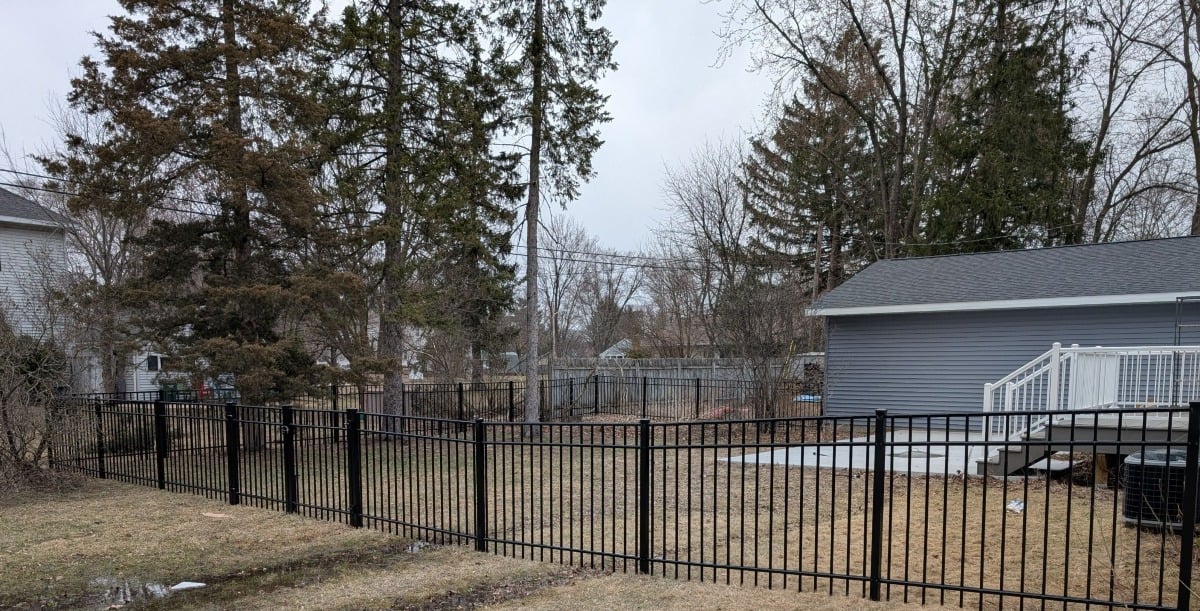
For pool applications, aluminum meets safety requirements while maintaining an open, airy appearance that doesn’t obstruct sight lines to the water. The material’s flexibility also makes it suitable for properties with slight grade variations common in Des Moines neighborhoods.
Steel Fencing: Maximum Security and Durability
When security is your primary concern, steel fencing provides unmatched strength and deterrent value. This material can withstand significant impact and is virtually impossible to breach without specialized tools. Steel fencing works particularly well for commercial properties, large residential lots, or homes in areas where security is a priority.
Modern steel fencing often features galvanized coatings followed by powder coating, providing excellent rust protection even in Iowa’s challenging climate. While steel requires more maintenance than aluminum, proper treatment can extend its life to several decades.
The visual impact of steel fencing is substantial, making it an excellent choice for property boundaries where you want to make a clear statement about security. However, this same robust appearance might feel overwhelming for pool areas or smaller residential applications.
Wrought Iron: Classic Elegance with Modern Benefits
Traditional wrought iron fencing offers timeless appeal that complements historic Des Moines architecture beautifully. However, modern “wrought iron” fencing is typically made from steel or aluminum designed to mimic the classic look while providing better performance characteristics.
These modern alternatives offer the ornate designs and elegant curves of traditional wrought iron without the maintenance challenges. The material works exceptionally well for front yards, garden areas, or anywhere you want to create visual interest while maintaining an open feel.
Pool Fence Installation Requirements in Iowa
Pool safety regulations in Iowa mandate specific requirements for any swimming pool, spa, or hot tub installation. Understanding these requirements helps ensure your pool fence installation meets both legal standards and provides adequate protection for your family and neighbors.
Height and Spacing Standards
Iowa follows guidelines requiring pool barriers to be at least 48 inches high, measured from the ground level. The fence must have openings no larger than 4 inches in any direction to prevent small children from squeezing through. These specifications apply to both the fence itself and any decorative elements.
Vertical spacing between pickets or bars cannot exceed 4 inches, and horizontal rails should be positioned to prevent easy climbing. If your fence design includes horizontal elements, they should be on the pool side to make climbing from outside more difficult.
Gate Requirements and Safety Features
Pool fence gates must open away from the pool area and include self-closing, self-latching mechanisms. The latch should be positioned at least 54 inches above ground level, out of reach of small children. Many Des Moines families opt for magnetic latches that provide secure closure while allowing easy adult access.
Gates should have the same height and spacing requirements as the fence itself. Some homeowners choose double-gate configurations for easier equipment access, but both gates must meet the same safety standards and latching requirements.
Professional Installation Considerations
Working with an experienced metal fence company ensures your pool fence installation meets all local requirements while providing optimal safety. Professional installers understand Iowa’s frost line requirements for post depth and can navigate any permitting requirements specific to your Des Moines neighborhood.
Quality installation includes proper concrete footings that extend below the frost line, typically 42 inches deep in central Iowa. This prevents fence posts from shifting during freeze-thaw cycles, maintaining the fence’s integrity and safety function over time.
Backyard Applications Beyond Pool Safety
Metal fencing serves numerous purposes throughout your Des Moines property, from creating private outdoor spaces to protecting gardens and defining property boundaries. Each application may require different considerations for height, style, and material selection.
Privacy and Property Boundaries
For backyard privacy, taller metal fencing combined with strategic landscaping creates effective screening while maintaining durability. Steel or aluminum fencing in the 6-foot height range provides substantial privacy while staying within most residential zoning requirements.
Consider the sight lines from neighboring properties and your own home when selecting fence height and style. Solid metal panels offer complete privacy but may create a closed-in feeling, while spaced picket designs maintain airflow and light penetration.
Garden and Landscaping Protection
Metal fencing excels at protecting gardens, flower beds, and landscaping investments from pets, wildlife, and foot traffic. Lower fencing heights work well for these applications, typically ranging from 3 to 4 feet depending on your specific needs.
Aluminum fencing works particularly well around gardens because it won’t leach chemicals into soil like some treated wood products might. The material also won’t attract insects or provide habitat for pests that could damage your plants.
Security and Access Control
For homes requiring enhanced security, metal fencing provides an effective deterrent while maintaining attractive aesthetics. Strategic gate placement allows controlled access to different areas of your property while keeping unwanted visitors out.
Consider combining metal fencing with security lighting, cameras, or alarm systems for comprehensive property protection. The fence serves as the first line of defense while supporting additional security measures.
Installation Process and Timeline
Professional metal fence installation follows a systematic approach that ensures lasting performance and compliance with local requirements. Understanding this process helps you prepare your property and set realistic expectations for project completion.
Site Assessment and Planning
The installation process begins with a thorough site assessment including property line verification, utility marking, and soil condition evaluation. This step identifies any potential challenges such as underground utilities, drainage issues, or elevation changes that might affect installation.
Your metal fence company will work with local utilities to mark underground lines before any digging begins. This safety step is required by law and protects both workers and your property’s infrastructure.
Permits and Approvals
Most Des Moines fence installations require permits, particularly for pool fences or installations exceeding certain heights. Your contractor should handle permit applications and ensure all work meets local building codes and zoning requirements.
The permit process typically takes 1-2 weeks, depending on the complexity of your project and current city workload. Some neighborhoods have additional requirements through homeowner associations that must also be addressed.
Foundation and Post Installation
Proper foundation work is critical for long-term fence performance in Iowa’s climate. Posts are typically set in concrete extending below the frost line, ensuring stability through multiple freeze-thaw cycles.
The concrete cure time affects project timeline, typically requiring 24-48 hours before fence panels can be attached. Weather conditions can extend curing time, particularly during cold or wet periods.
Panel Installation and Finishing
Once foundations are secure, fence panels are installed according to manufacturer specifications and local requirements. This stage moves relatively quickly, with most residential projects completed within 1-2 days after foundation curing.
Final installation includes gate hardware, safety latches, and any electrical components for automated gates. Quality contractors perform final inspections to ensure all components meet safety and performance standards.
Maintenance and Long-Term Care
Metal fencing offers excellent longevity when properly maintained. Understanding basic care requirements helps maximize your investment and maintain appearance and functionality over decades of service.
Routine Cleaning and Inspection
Annual cleaning with mild soap and water removes accumulated dirt, salt, and environmental pollutants that can affect finish quality. Pay particular attention to areas near roads where salt spray from winter maintenance might accelerate corrosion.
Regular inspection identifies minor issues before they become major problems. Check for loose hardware, damaged coatings, or signs of rust, particularly around gate hardware and high-wear areas.
Seasonal Maintenance Tasks
Spring inspections should focus on winter damage assessment and lubrication of moving parts. Gate hardware particularly benefits from periodic lubrication to maintain smooth operation and prevent premature wear.
Fall maintenance includes removing accumulated leaves and debris that might trap moisture against fence components. This simple step prevents accelerated corrosion and maintains the fence’s appearance.
Professional Service and Repairs
While metal fencing requires minimal maintenance, professional service ensures optimal performance and longevity. Annual professional inspections can identify potential issues early and maintain warranty coverage.
Most reputable metal fence companies offer maintenance services and replacement parts for their installations. Establishing a relationship with your installer provides access to expertise and parts when needed.
Making the Final Decision for Your Des Moines Property
Selecting the right metal fence for your Des Moines property involves balancing multiple factors including budget, aesthetics, functionality, and local requirements. Taking time to evaluate your specific needs ensures a decision that serves your family for decades.
Consider your property’s unique characteristics including soil conditions, drainage patterns, and existing landscaping when making material selections. What works well for one Des Moines neighborhood might not be optimal for another due to environmental differences.
ReVamp Fence & Deck brings extensive experience with Iowa’s climate challenges and local requirements to every metal fence installation project. Our team understands the unique needs of Des Moines properties and can guide you through material selection, design options, and installation planning to create the perfect solution for your outdoor space.
Whether you need pool fence installation to meet safety requirements or want to enhance your property’s security and curb appeal, professional installation ensures optimal performance and compliance with all local standards. Contact ReVamp Fence & Deck today to discuss your metal fencing needs and discover how the right fence can transform your outdoor living experience.
Let’s Get Started on
Your Free Quote!
Fill out this handy form or call us now at 844-4-FENCE-NOW to get your free, no-obligation estimate!